
Crenshaw County Criminal Court Records
Criminal court records in Crenshaw County are maintained through the Circuit Clerk for District Court and Circuit Court proceedings. The official Circuit Clerk page lists Criminal and Warrants among the clerk's court-record divisions and states that the clerk is the official record keeper and business manager for court proceedings held in those courts. The court case file begins once charges are filed with the court, then grows as arraignment, hearings, motions, pleas, trial events, disposition, sentencing, fines, costs, and post-judgment activity are entered.
Crenshaw County is part of Alabama's Second Judicial Circuit. Circuit Court is the general-jurisdiction trial court for felony criminal cases and other major matters. District Court handles many misdemeanors, traffic citations, preliminary hearings, and limited-jurisdiction matters. The District Attorney for Circuit 2, Charlotte M. Tesmer, prosecutes state criminal cases for Crenshaw, Butler, and Lowndes Counties. The court record shows the case as filed and resolved; the arrest side and the charging decision are discussed separately in Crenshaw County arrest records and court charges.
Search Crenshaw County Criminal Court Records
The primary online case-detail channel is Alacourt ACCESS, or Just One Look. Alacourt identifies Criminal Records as one of the available Alabama trial-court categories. Searchers can use a name search or a case-number search. The system charges for searches and case detail, and a search result showing no matching record still counts as a search. The Crenshaw docket page can help with court settings, but it does not replace a full criminal case record.
- Start with a defendant name, case number, ticket number, or known court level.
- Use Alacourt ACCESS for statewide trial-court case detail when the case is in District Court or Circuit Court.
- Use the Crenshaw docket search by setting date when the need is to confirm a hearing date.
- Read the case action summary, charges, party details, financial history, and disposition together before drawing conclusions.
- Request a certified copy from the Circuit Clerk when the record must be used for filing, licensing, employment review, or another official purpose.
Disposed criminal fines may also be searched through Alapay's criminal-fine search for Circuit, District, and Municipal criminal cases with balances. That payment channel is not the full criminal case file, but it can confirm a balance tied to a disposed case.
Alapay criminal fines is the payment-search source for disposed criminal cases with balances.
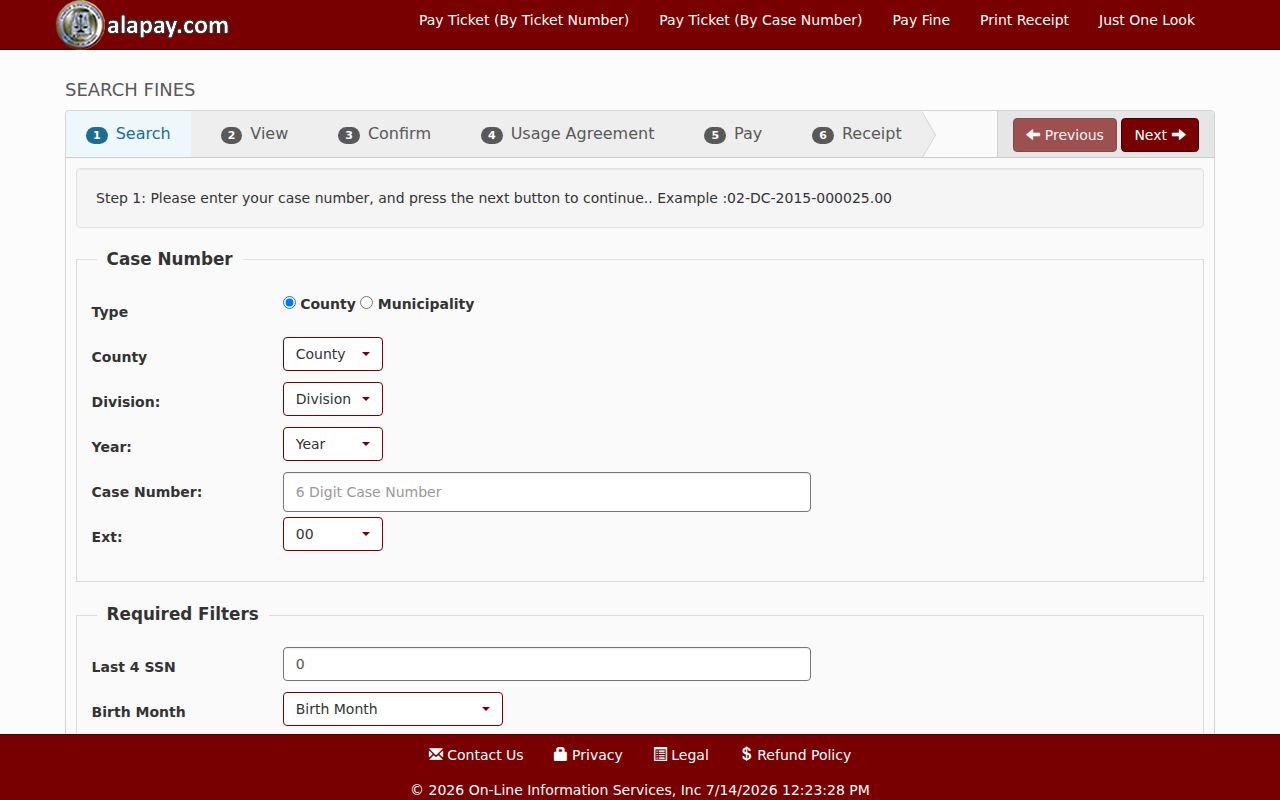
Alapay can help with fine balances, but the criminal court record itself remains with the court and clerk system.
Crenshaw County Criminal Case Flow
A criminal court record should be read in order. The charge starts the court case, but the later entries explain whether it stayed pending, changed, was dismissed, ended in a plea, went to trial, or resulted in a sentence. A single arrest can produce more than one charge. A single case can also include amended charges, reduced charges, separate counts, bond actions, probation terms, restitution, and court costs.
Case flow: Charges Filed › Arraignment › Pretrial / Motions › Plea or Trial › Disposition › Sentencing
| Stage | What Happens |
|---|---|
| Charges Filed | The complaint, information, indictment, citation, or other charging paper opens the criminal case record. |
| Arraignment | The defendant is advised of the charge and enters a plea such as guilty or not guilty. |
| Pretrial / Motions | The record may show motions, orders, continuances, bond issues, discovery events, or hearing settings. |
| Plea or Trial | The case may resolve by plea, bench trial, jury trial, dismissal, or another court ruling. |
| Disposition | The final outcome is entered for the case or for each charge or count. |
| Sentencing | The court may enter jail or prison time, probation, fines, costs, restitution, or other terms. |
What Crenshaw Criminal Records Show
A Crenshaw County criminal court record can include both schedule information and final results. Alacourt lists court setting dates, court actions and rulings, party information, case action summary, financial information and costs, and document images or attachments when available. The Circuit Clerk's criminal division holds the official court record, while the District Attorney's office is tied to prosecution decisions and the Sheriff is tied to arrest, custody, and warrant questions.
| Field | What It Shows |
|---|---|
| Case Number | The Alabama court case identifier, often using county code, division, year, sequence number, and extension. |
| Defendant | The person charged in the criminal court case, plus attorney or party details when public. |
| Charges | The offense or count filed with the court and any amended, reduced, dismissed, or added charge entries. |
| Court Settings | Arraignment, hearing, motion, trial, review, or sentencing dates. |
| Plea | The defendant's formal response, such as guilty, not guilty, or another plea shown by the court record. |
| Disposition | The final outcome, such as guilty, not guilty, dismissed, acquitted, or otherwise resolved. |
| Sentence and Costs | Jail, prison, probation, restitution, fines, court costs, payment history, or outstanding balances when public. |
Crenshaw Charges vs Convictions
A charge is not a conviction. The Crenshaw County criminal court record may show charges that were filed and later dismissed, reduced, amended, or resolved by plea to a different count. A conviction requires a guilty plea, verdict, or other court result that supports judgment. Reading only the opening charge can give a false picture of the final case outcome.
| Issue | Charge | Conviction |
|---|---|---|
| Stage | An accusation filed with the court. | A final court outcome based on plea or verdict. |
| Record effect | May remain as a filed count even if later dismissed or amended. | Usually tied to judgment, sentence, fine, cost, or probation terms. |
| Best field to check | Charging document and charge list. | Disposition, judgment, sentence, and case action summary. |
Read Dispositions and Sentences
The disposition is the final outcome of a case or charge. It may be different for each count. Sentencing fields should be read with the disposition, plea, and financial history. Fines, costs, and restitution can appear even after a case is disposed. Alapay may show balances for disposed criminal cases, while Alacourt case detail may show the broader action summary. If a case includes a failure to appear, the record may also connect to warrant, bond, suspension, or forfeiture actions.
Common terms include arraignment, plea, motion, order, continuance, disposition, restitution, probation, capias, and bench warrant. A capias or bench warrant is a court-issued custody order, often tied to missed court, contempt, or noncompliance. A dismissed charge is not the same as an acquittal. A nolle prosequi entry means the prosecution has declined to proceed on that charge at that point, subject to the legal context of the case.
Sealed vs Expunged Criminal Records
Alabama expungement can remove eligible criminal records from public access, but eligibility depends on charge type, outcome, waiting period, prior history, and the statutory process. A Crenshaw County expungement petition is filed in the court with jurisdiction over the underlying criminal case, not with the Sheriff alone. The petition may require certified records, service on the prosecutor and law-enforcement agencies, filing fees, and a hearing or objection period.
| Issue | Sealed | Expunged |
|---|---|---|
| Public visibility | Closed to public access by statute, rule, or court order. | Removed from public access if the court grants statutory relief. |
| Who may still see it | Courts, agencies, or parties with authority may retain limited access. | Courts, law enforcement, prosecutors, or other authorized users may retain limited access in some contexts. |
| Crenshaw filing point | The court or custodian controlling the restricted record. | The court with jurisdiction over the underlying criminal case. |
Ala. Code Section 15-27-1 addresses non-felony, traffic, and municipal expungement eligibility.
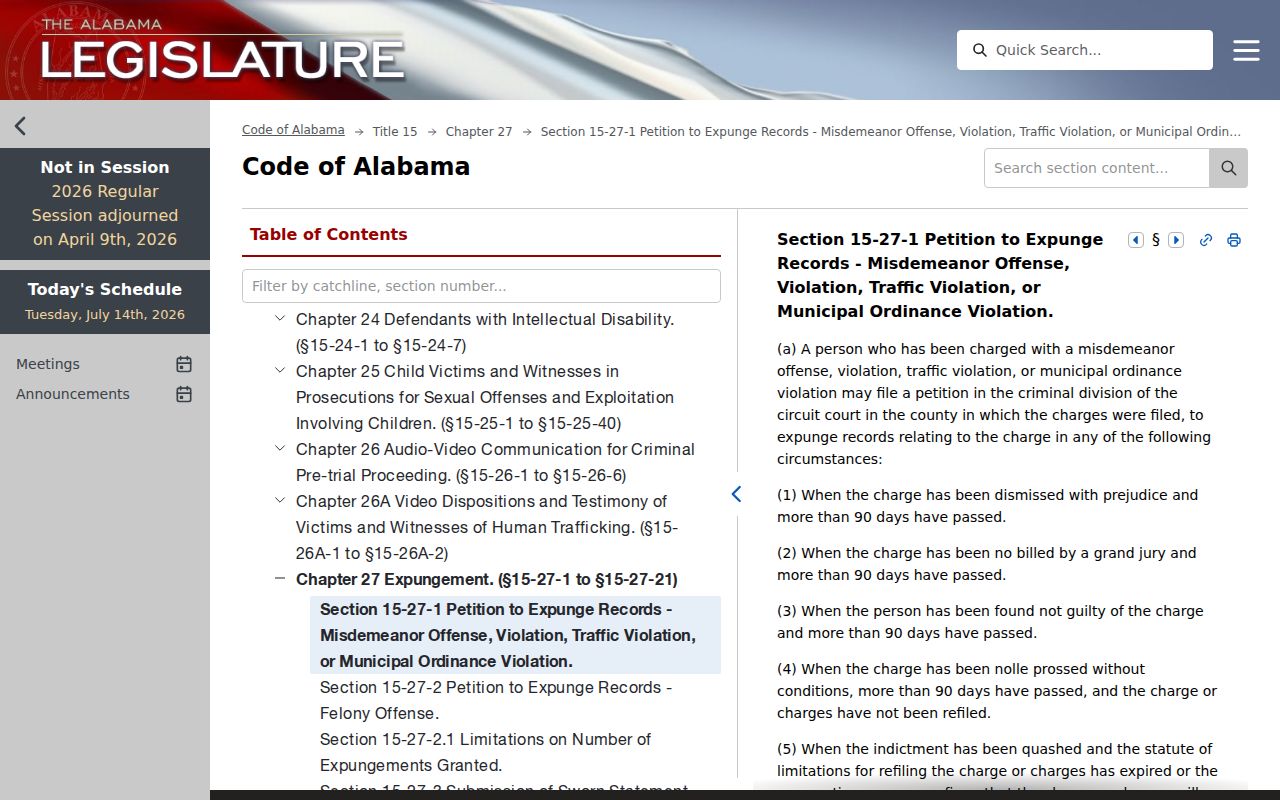
That statute is part of the public-access limit for eligible criminal court records after a qualifying outcome.
Ala. Code Section 15-27-2 is the felony expungement eligibility source.
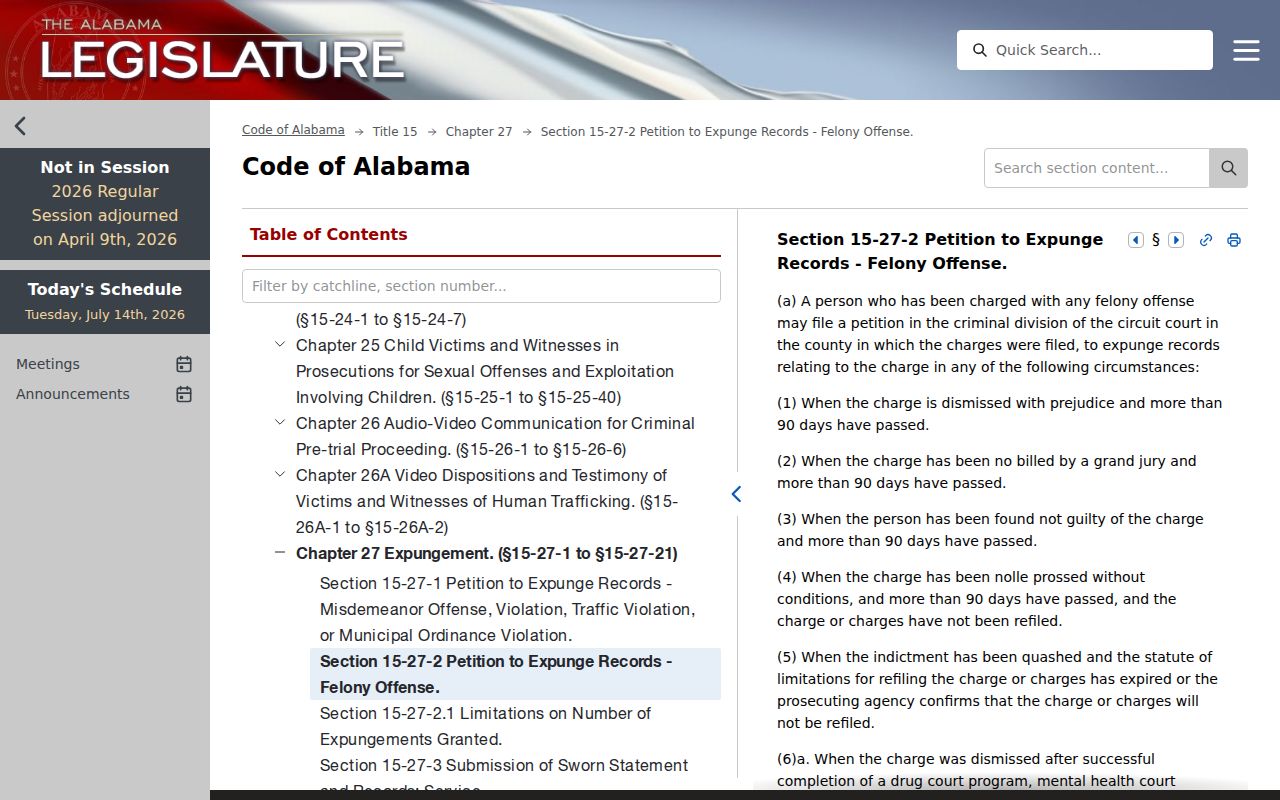
Felony expungement is narrower and must be read against the exact charge outcome in the Crenshaw County criminal court record.
Crenshaw Criminal Record Access
Public access starts with the court custodian and the court record itself. Ala. Code Section 36-12-40 provides Alabama's baseline right to inspect and copy public records, while court-record privacy rules and confidentiality statutes control what parts of a criminal file can be shown. Juvenile records are generally confidential. Sealed and expunged records are not open like ordinary case records. Victim information, protected addresses, Social Security numbers, financial account numbers, and medical information can be redacted or withheld.
Ala. Code Section 15-27-4 addresses expungement petition procedure.
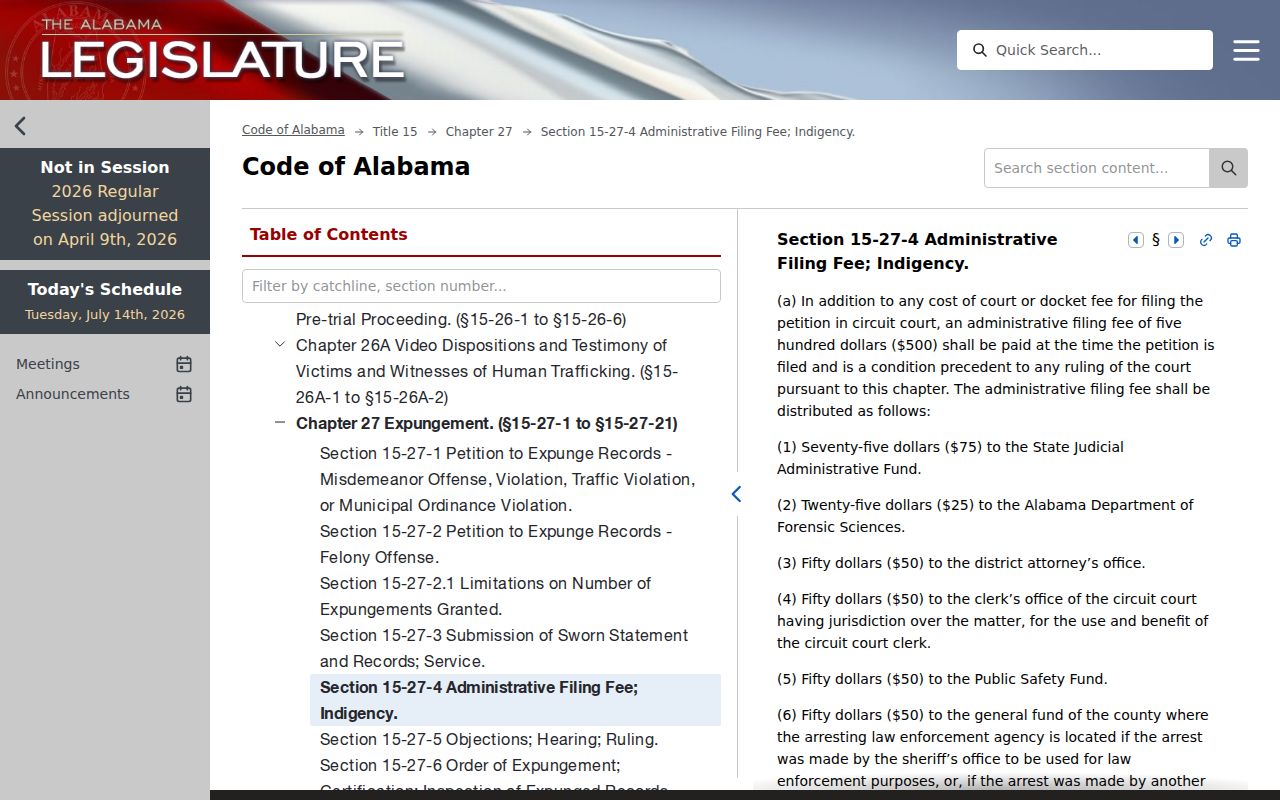
The petition procedure matters because public visibility changes only after the court grants relief and agencies process the order.
Statewide and Federal Checks
A Crenshaw County criminal court records search is not a complete statewide background check. Court records show cases filed in court. State custody, prison status, sex-offender information, federal cases, and official criminal-history products use separate systems. The research identified ALEA Community Information Center material for sex-offender and ATS contact, ADOC for currently incarcerated state inmates, VINE for custody notification, and federal court systems for federal cases.
Important: Court records should not be used as a consumer report for FCRA-regulated decisions.
ALEA's contact and ATS page is the state source for the Community Information Center.
ALEA resources are separate from Crenshaw County criminal court records and should be used only for the state-level record type they cover.
CourtListener is a free legal-research source for some federal and appellate materials.
CourtListener is not the official Crenshaw County record custodian, but it can help identify some federal or appellate material outside the county system.
Restricted Crenshaw Criminal Records
Restricted criminal records include juvenile matters, sealed matters, expunged records, sensitive victim information, protected addresses, and files limited by court order. Active investigations and search-warrant materials may also be restricted before execution, return, or court release. The Circuit Clerk can explain filing logistics and record availability, but the clerk cannot give legal advice about expungement eligibility, defense strategy, or how a record will affect employment, licensing, or immigration status.
For copies, identify the exact case number if possible. If the case number is not known, provide the defendant's name, approximate filing date, charge, and court level. Ask whether the document is public, whether a certified copy is available, and what current copy fees apply. Crenshaw-specific criminal copy fees were not located in the official online research, so wording should avoid stating a copy price unless confirmed by the Circuit Clerk.